The Skill That Decides Who Gets Promoted, Not Just Who Gets Hired
Published on August 13, 2026
Blogs
Promotion Decider: Skill vs Communication
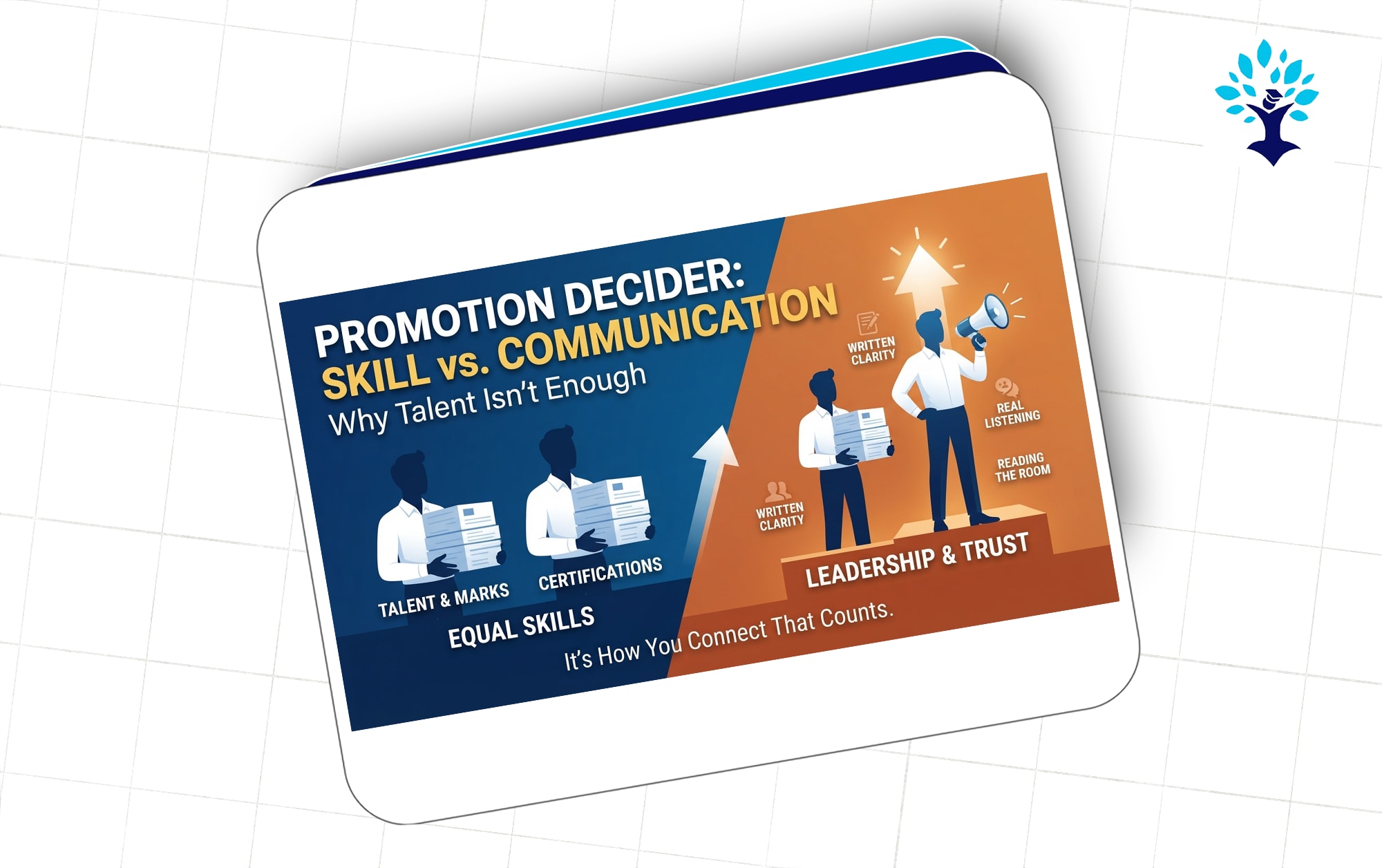
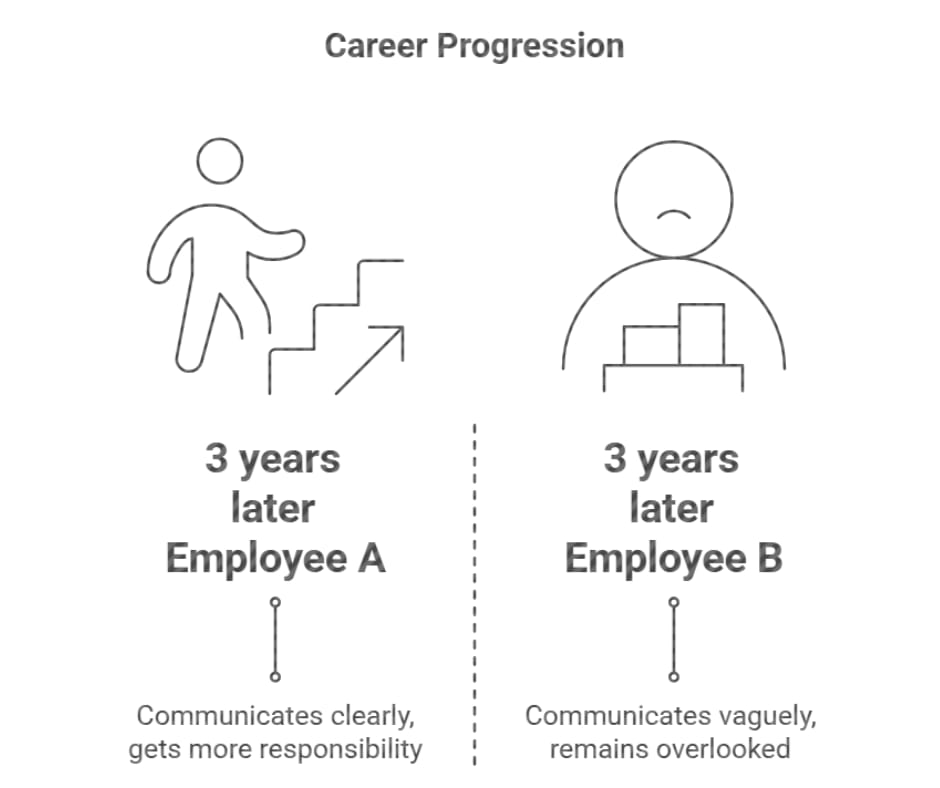
Two people graduate from the same college, with the same marks, the same internship, and the same certifications on paper. Fast forward three years and one's leading a small team while the other's still waiting for someone, anyone, to notice the work they're putting in. If you ask people who've actually watched this happen — team leads, HR folks, hiring managers — what made the difference, "communication" comes up way more often than talent or marks ever do.
Sounds like something you'd read on a motivational poster, I know. But it isn't. It's a pattern that keeps repeating in real workplaces, and it frustrates managers constantly because everyone's so focused on technical skill that this one quietly decides who actually moves up.
Why This Matters More Than Almost Anything Else on Your Resume
Technical skill gets you through the door. That's about where its power ends, because most problems at work aren't really technical problems — they just look like one from the outside. A project doesn't collapse because nobody knew how to write the code. It collapses because the requirements were explained badly, or a blocker got mentioned two days too late, or feedback landed in a way that made someone shut down instead of actually hear it.
Managers see this over and over, even if they never quite say it out loud. Someone who flags a delay early and explains it clearly gets handed bigger things next time. Someone who goes quiet until the deadline blows up gets watched more closely afterward — doesn't matter how good the work underneath actually was. Communication ends up deciding how much trust and independence you get, way more than raw ability does.
It Starts Working Against (or For) You Before You Even Get Hired
A recruiter forms an opinion about your communication before you've said a word about your actual skills. Your resume tells them something — is it clear and easy to skim, or a mess you clearly copy-pasted from a template five other people used too? The follow-up email you send after applying tells them something. And the interview itself is where it shows the most: someone who explains a complicated project simply, in a way that actually lands, beats someone who technically knows more but loses the interviewer halfway through the answer.
This is exactly why two people with near-identical skills on paper can walk out of the same interview with completely different outcomes. One explained their thinking clearly, answered what was actually asked instead of drifting into a rehearsed speech, and asked a couple of sharp questions back. That thirty-minute impression often beats a slightly stronger resume sitting right across the table. Of course, strong communication works best when it's backed by credentials recruiters already recognize, which is why these Three Names Requirters Actually Trust are worth knowing.
Communication Isn't Just "Talking Well" — Most People Stop There
Ask someone to define communication skills and nine times out of ten they'll say something about being a confident talker. That's such a small slice of it, and thinking it's the whole picture is exactly why so many people never actually get better at this.
Written communication matters more day to day than talking does, honestly, because so much of work now happens through email, Slack, and shared docs instead of face-to-face conversation. Someone who can send a clear, three-line update instead of a rambling paragraph saves everyone around them real time, and managers juggling ten people's updates notice that fast.
Listening barely gets mentioned when people talk about "communication skills," which is strange because it might be the harder half of the whole thing. People who ask a clarifying question instead of guessing, who can actually repeat back what someone meant before responding — they avoid so much of the miscommunication that quietly wrecks projects from the inside.
And then there's knowing how to explain the same thing differently depending on who's listening. An engineer explaining a delay to another engineer and explaining it to a non-technical manager should not sound the same. People who use one style no matter who's in front of them lose their audience constantly and don't even notice it happening.
Written clarity — short, structured updates people can actually act on
Real listening — clarifying instead of assuming you already got it
Reading the room — adjusting how you explain something based on who's asking
Tone and timing — especially on video calls, where half the usual cues just disappear
The Part Nobody Tells You: This Is What Actually Gets You Promoted
Most career advice stops at "communication helps you get hired" and never mentions what happens after. Promotions go overwhelmingly to people who can represent their own work clearly to the people above them — not necessarily to whoever quietly did the most impressive work in the background and never said a word about it.
A manager deciding who's ready for more is basically asking one thing on repeat: can I trust this person to tell me about a problem before it turns into a full-blown crisis? Someone who flags risk early, who explains a setback without making excuses, who sends updates without needing to be chased down — that person looks ready for more. Someone brilliant at the actual work but vague every time you ask "how's it going" starts to look like a liability, no matter how solid the underlying skill is.
You Won't Just Get Better at This by Waiting
Here's the uncomfortable part — communication doesn't automatically improve with time on the job. Plenty of people spend years working without getting noticeably better at this, mostly because they never practiced it the way they practiced their actual technical skills.
A few things that genuinely move the needle: rewrite a message before sending it, every single time, and cut whatever doesn't help the reader understand faster. Try explaining your current project to someone completely outside your field — your mom, a friend from a totally different line of work — because that forces real clarity instead of jargon shortcuts you didn't even know you were leaning on. Ask a colleague directly how you come across in meetings instead of trusting your own read on it, since most people's self-assessment here is off by more than they'd guess. And if you've got the stomach for it, record yourself explaining something once and actually watch it back — the number of filler words and half-finished thoughts people don't realize they're saying is genuinely surprising the first time.
Final Thought
Every manager has a story about someone technically sharp who got passed over anyway, because nobody quite trusted how they'd handle a hard conversation or an honest update about something going wrong. Communication isn't the soft, secondary skill people treat it as — it's the thing that decides whether your actual ability even gets seen in the first place. Put real effort into it, the same way you would into any technical skill, and watch how much further it takes you than your next interview.