Working Overseas Isn't a Fantasy Anymore: A Real Beginner's Roadmap to Getting a Job Abroad
Published on July 26, 2026
Blogs
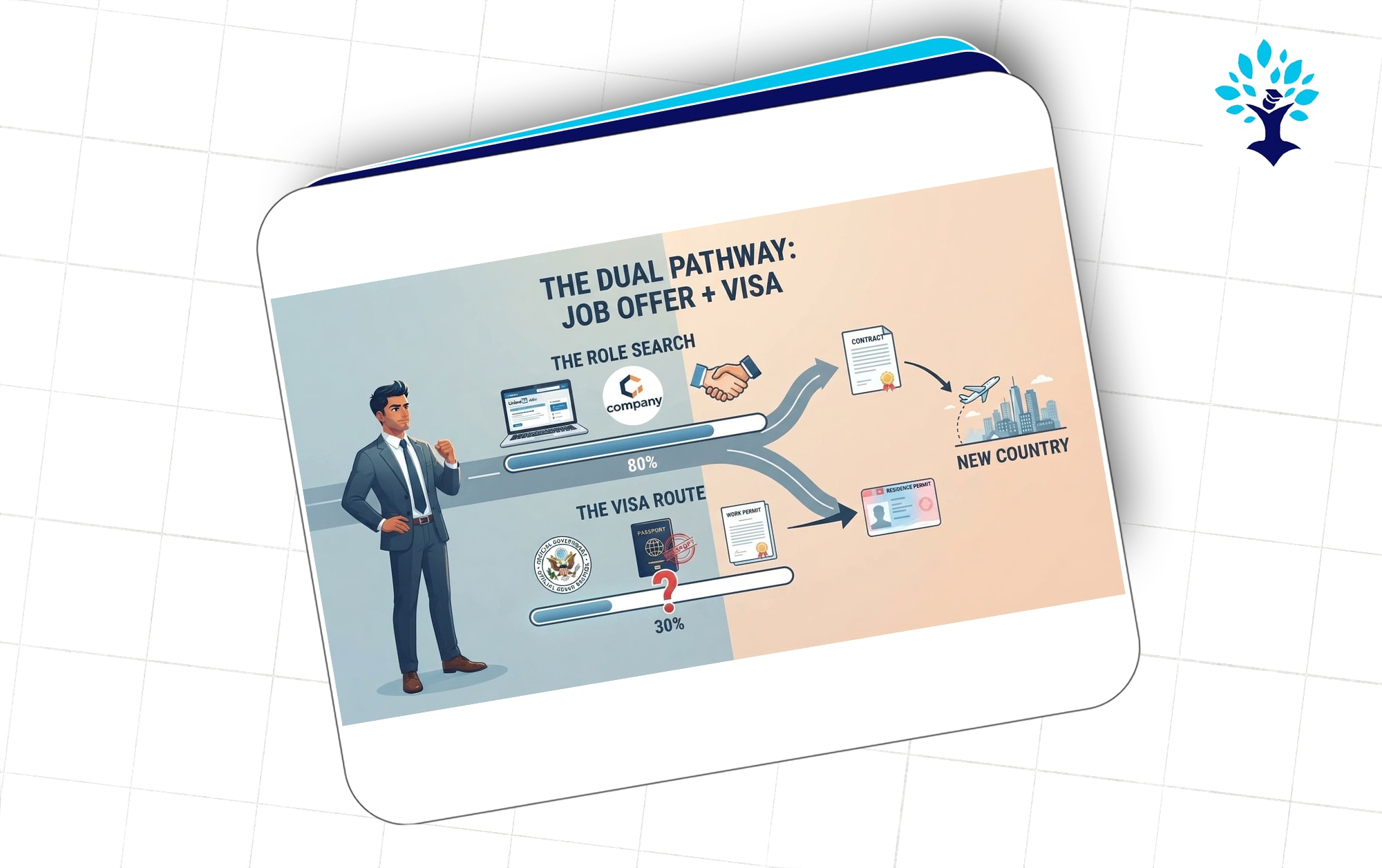
A Real Beginner's Roadmap to Getting a Job Abroad
Ask around, and you'll find one — a cousin in Canada, a friend grinding it out in Dubai, that one batchmate from college who casually mentioned they got an offer from Berlin last month, and everyone acted surprised for about a day before moving on. Working abroad used to feel like something reserved for toppers or people with money already backing them. That's not really true anymore. Lakhs of Indians, freshers included, are making this move every single year.
What nobody tells you upfront is that landing a job abroad has very little to do with luck. It's not about firing off applications on every foreign job site at 2 am and hoping something sticks. There's a sequence to it — a boring, occasionally annoying, entirely learnable sequence — and getting that order right is what saves you months of running in circles. Here's how it actually works.
Why the Interest Has Spiked
It helps to know why so many people are suddenly serious about this, because the reason shapes your whole approach.
Germany, Canada, and Australia have real skill shortages in IT, healthcare, engineering, and skilled trades right now, and their visa systems have been loosened to deal with it. The Gulf keeps hiring across construction, hospitality, healthcare, and corporate roles too, and the entry barriers there are nowhere near as steep as in Western countries. Then there's remote-first hiring, which has created this strange new middle category — jobs that pay in dollars or euros while you never actually pack a bag. None of this makes the process easy. It just means the door isn't shut the way it used to be, provided you walk through it with a plan instead of a wish.
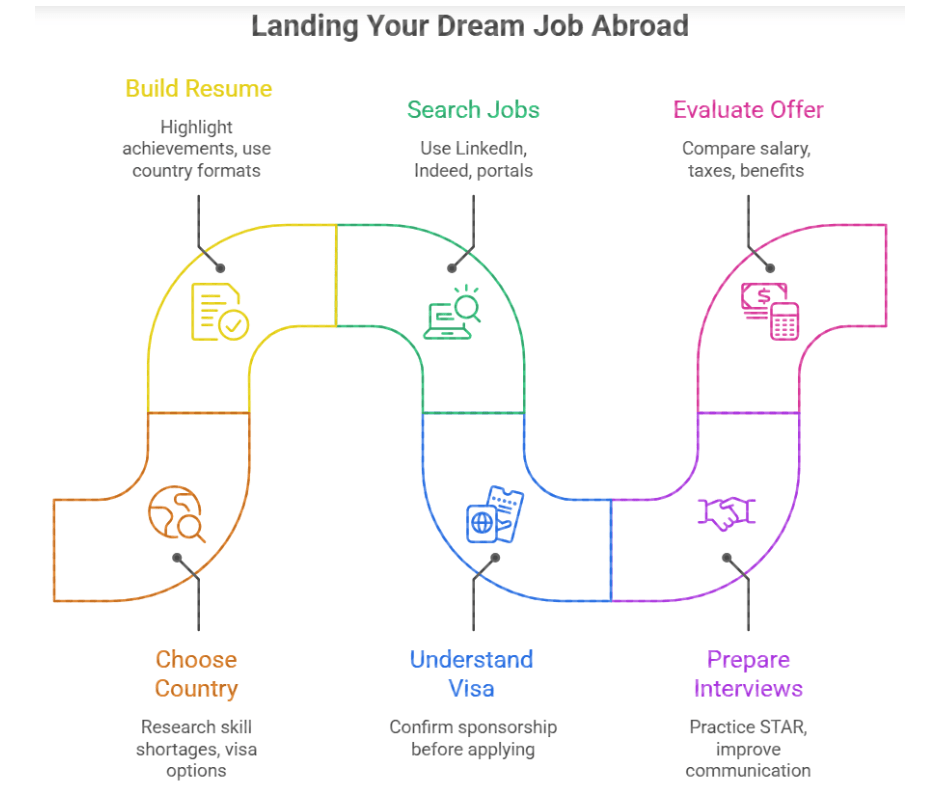
Step 1: Choose a Country Based on Demand, Not Daydreams
Most beginners get this backwards. They decide "Canada" first, out of some mix of movies and Instagram reels, and only afterward start wondering whether their skills are wanted there at all. Flip the order.
Check what each country's official skill-shortage or in-demand occupation list actually says, and see where your own profile fits.
Germany and much of the EU are actively short on engineers, IT professionals, and skilled nurses — shortage-occupation roles often get faster visa processing.
UAE, Saudi Arabia, and Qatar hire consistently across hospitality, construction, retail, healthcare, and corporate support, usually through employer-sponsored visas that are far less complicated than people assume.
Canada runs a points-based system through Express Entry, so your job title on paper carries almost as much weight as your experience.
Australia's skilled migration list changes yearly, so build your resume around whatever's current, not whatever a two-year-old blog post told you.
Pick two countries. Three at the absolute most. Spreading yourself across every option waters down your resume, your research, and, honestly, your motivation, too.
Step 2: Build a Resume That Doesn't Scream "India Only"
An Indian-format resume — photo attached, marital status listed, a vague "Objective" paragraph up top — won't survive outside India. Recruiters abroad skim for very different signals.
Drop the photo, the age, the marital status, unless the specific country expects it (a handful of Gulf employers still do, so check before you assume). Lead with results you can measure instead of duties you performed. "Managed a team of 5" tells a recruiter nothing. "Cut order processing time by 30% by restructuring the fulfillment workflow" tells them everything they need in one line.
Match your format to the country too — Europe often wants something closer to a Europass CV, while the US and Canada prefer a tight one or two pages with strong action verbs and none of the filler. And if your target country needs credential recognition (Canada's WES, Germany's Anabin database, that sort of thing), start that process early. It can eat up several weeks on its own, and you don't want it holding up an otherwise-ready application.
Step 3: Stop Relying on Random Google Searches
Typing "jobs in Canada" into Google and scrolling isn't a job search strategy; it's a way to burn an evening. Use platforms actually built for this.
Country-specific portals work better than generic ones — Indeed's local versions, LinkedIn Jobs filtered by location, and government portals listing shortage occupations. Recruitment agencies that specialize in overseas placement are worth chasing too, especially for Gulf and healthcare roles where employer sponsorship is standard practice. Don't skip company career pages either; a surprising amount of overseas hiring never even reaches the big job boards. And there are LinkedIn groups and subreddits full of people already working in these countries who share real openings before they ever go public. Choosing the right platform is just as important as choosing the right country. Exploring the best job search websites can help you find trusted international job portals, company career pages, and recruiter platforms that regularly advertise overseas opportunities.
Set alerts. Apply within 48 hours of a posting going live if you can manage it. And track every single application in a basic spreadsheet — company, role, date, status. It sounds almost too simple to matter, but it's the one habit that separates people who stay organized from people who lose track of forty scattered applications and can't remember who they even applied to.
Step 4: Know the Visa Route Before You Fall in Love With a Job
An offer letter feels like the finish line. It isn't. The visa process is usually where things quietly fall apart if you haven't done your homework.
Employer-sponsored work visas are common across the Gulf and increasingly in Canada and the UK, where the employer kicks off the process on your behalf. Points-based immigration — think Canada's Express Entry or Australia's skilled visa system — scores you on age, education, experience, and language ability, sometimes before you even have a job offer in hand. Then there's the EU's Blue Card and various shortage-occupation visas, which often come with relaxed salary thresholds for roles that are in high demand.
Talk to HR about sponsorship before you get emotionally attached to a role. A dream offer without visa support can collapse the moment the paperwork stage begins, and that's a rough thing to find out three weeks in.
Step 5: Prepare for Interviews That Follow a Different Playbook
International interviews lean far more behavioral than what you're used to back home. You're not just reciting what you know — you're walking someone through how you actually think and act.
Practice the STAR method (Situation, Task, Action, Result) with five or six real examples pulled from your work or academic life until you can tell them without stumbling. Look into how fast the hiring process moves in your target country — Middle Eastern employers sometimes move within days, while European companies can stretch things across several rounds over multiple weeks. If spoken English isn't your strongest area, record yourself answering common interview questions and actually listen back. You'll catch filler words and pacing problems you'd never notice otherwise. And for roles where a local language matters — German, French, Arabic in certain sectors — even basic conversational ability can shift things noticeably in your favor.
Step 6: Do the Math Before You Say Yes
A number that looks huge in rupees can look completely different once you factor in the actual cost of living, taxes, and what lands in your account each month.
Before accepting anything, compare the salary against cost-of-living data for the exact city, not some vague country-wide average that means nothing on the ground. Ask precisely what the employer covers — flights, accommodation, health insurance, family visa costs are all fairly standard in Gulf contracts, but rarely automatic elsewhere, so get it in writing. And check the tax structure carefully. A tax-free salary in the UAE and a taxed one in Germany aren't directly comparable just by staring at the figure printed on the offer letter.
Final Thought
None of this requires you to be the most brilliant candidate in the room. It requires you to be the most prepared one — someone who picked a sensible country, built a resume that gets past the first skim, tracked applications instead of losing them, and understood the visa maze before diving in headfirst. Thousands of Indian freshers and mid-career professionals pull this off every year without any special advantage. There's no real reason your name can't be on that list next year too.
Pick one country. Fix one resume. Give it one focused week of applications. The momentum tends to build from there on its own.