Why Is "Tell Me About Yourself" the Most Important Interview Question?
Published on July 25, 2026
Blogs
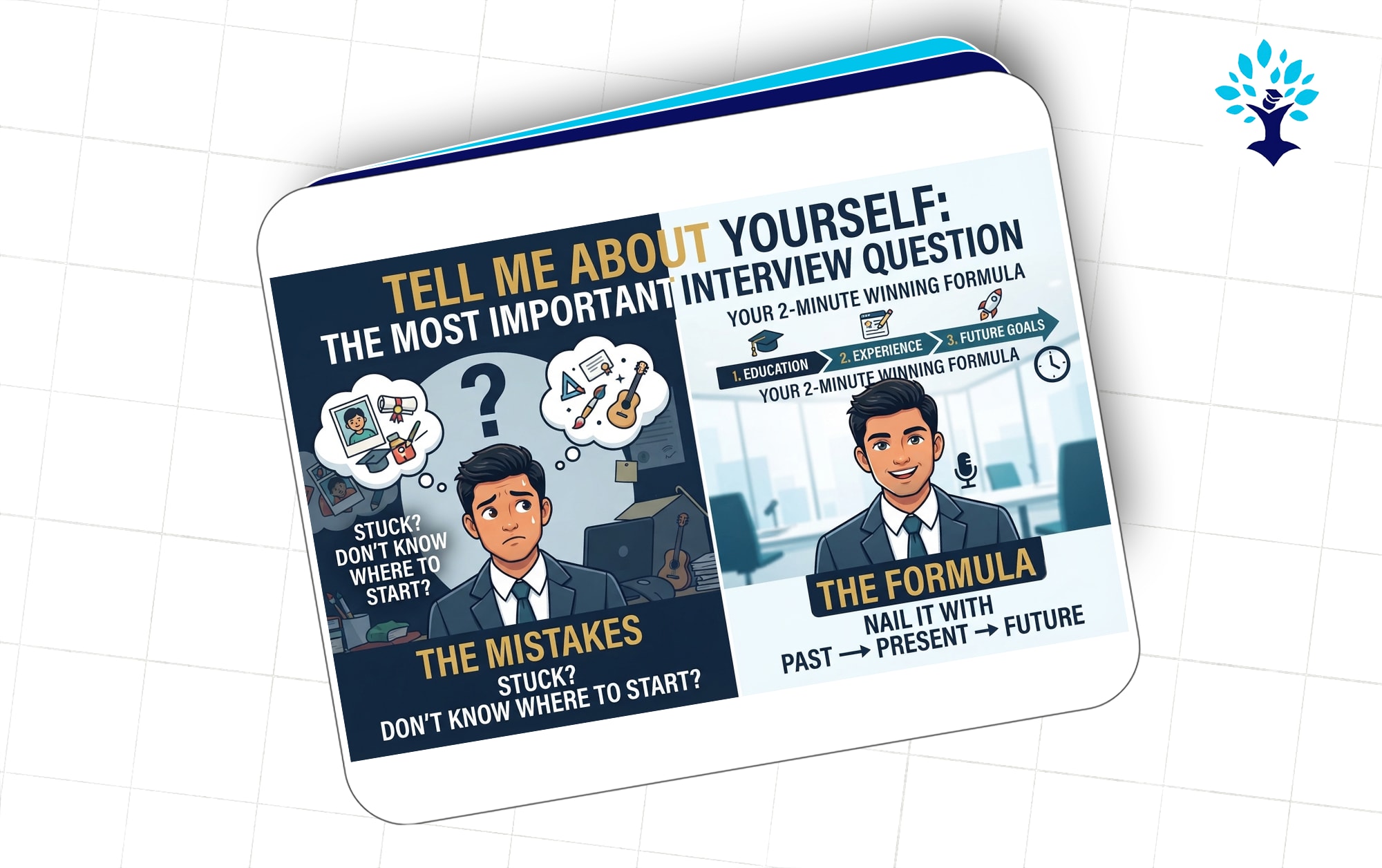
The Most Important Interview Question?
You will be required to introduce yourself in an interview.
It sounds simple. This is the area where most of the freshers have problems.
Are you inviting me to introduce myself to you? Five words. Somehow, they make even the very well-prepared candidates lose their memory. This is an easy one, isn't it? Talking about yourself.
But the problem is that it can be interpreted in so many ways, and it's the number one problem. If you don't know where to start, what do you do? Your childhood? Your degree? Your hobbies? Your LinkedIn bio?
The problem with this is that it is not a small talk question. It's a deliberate beginning for the interviewer. They are interested in your communication abilities, your self-awareness, and how you connect your narrative to the job you are looking for. If you do it well, you establish a positive tone for the entire interview. If you get it wrong, you will have to work back for the next 45 minutes. Let's be sure you get it right.
What the Interviewer REALLY wants to hear?
So let me set aside one of the myths, the first thing I want to set aside is that...
They don't want your life story. They don't care about your childhood, your parents' work, or the number of siblings you had.
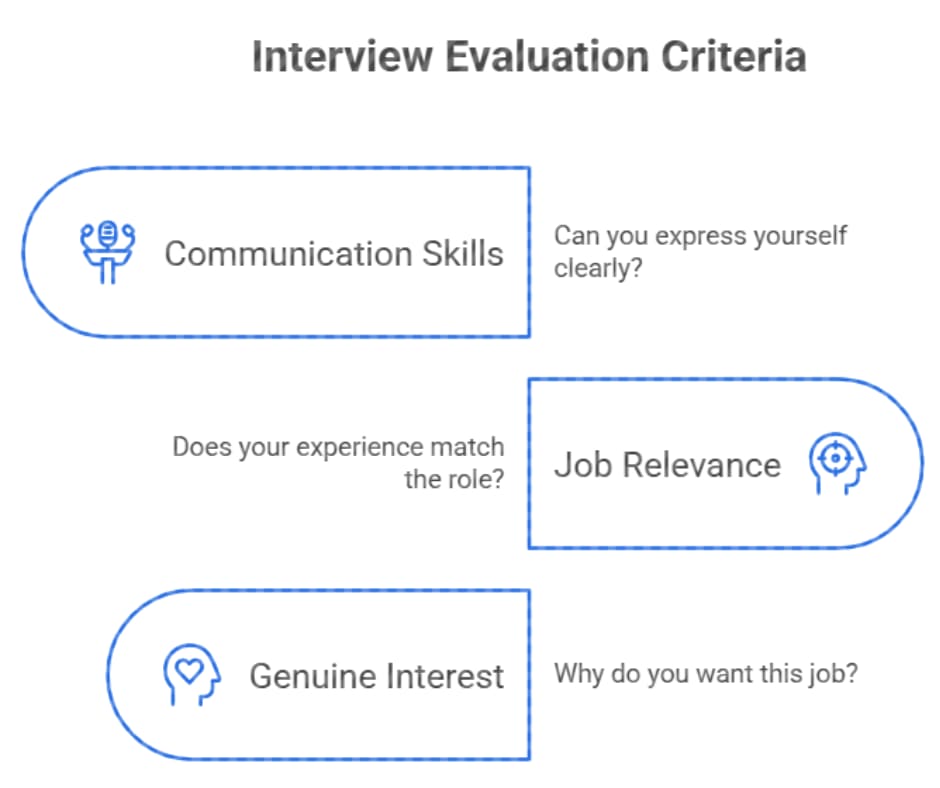
What they're trying to work out is:
Do you possess a strong voice and confidence in speaking? Does your experience match that of this role? Is it a job that you're genuinely interested in, or are you putting in applications for any job or career that you could find? You will have 90 seconds to 2 minutes to answer all three points.
What is the formula that works all the time?
Don't guess at the answer to this question.
Structure it instead.
The following is a simple 3-part recipe that can be used by a novice to a pro:
1. Your Educational Background
Introduce yourself and your journey to date.
2. All Things You Have Done
Discuss one of your most relevant experiences, projects, internships, accomplishments, or achievements. Describe your reasons for applying for this role. Highlight your enthusiasm for the company and what you love about the position, as well as why you think it's a good fit for your career objectives.
That's it.
Past → Present → Future
Be brief and on focus.
In Real Life
When applying for a Marketing position for freshers, the following is a sample answer:
I think this position is a perfect fit for me because I've been seeing your brand for quite some time, and we're just not about what looks good, but what actually works, and that’s what your team does.
Notice there is a pattern in this answer:
It's not a common term; it's a specific word.
It has a real and measurable result (an increase in engagements of 40%).
It infuses the real business with personal interest.
It's more than a voice reading a resume; it's a person speaking.
“The top ten mistakes freshmen make.”
The Top Ten Freshmen Errors:-
1. Reciting Your Resume
Your CV has already been in front of the interviewer. Don't read it back to them. Locate one or two items and add more context missing from the document.
2. Going Too Long
If your answer continues after 3 minutes, you've lost the person! Concise is a part of the art of communication. Respect their time.
3. Being Too Vague
All they know about him is that he loves challenges, is hard-working, and loves teamwork. Everybody says this. Be specific.
4. Memorising It Word for Word
If they don't remember the lines, they'll sound like a robot or panic.
Be familiar with the structure, not the script. Repeat until you get it in your head.
5. Don't link back to the role
Your answer should be along the lines of it leading to this job, but not just describing your life. Each section of your introduction needs to support your argument that you are a good candidate for the job.
The Tip Most Candidates Ignore
One simple step has been underestimated, thus leaving out massive opportunities. Before meeting with a potential employer, read the job description one last time for 10 minutes. Find out 2-3 skills/qualities that are important in the company. Then ensure that those qualities are incorporated into your answer to the question "Tell me about yourself.
For example:
If the JD mentions:
Problem-solving
Cross-functional collaboration
If that's the case, then your answer should contain some instances in which you actually used those skills. This is how to make a "fair" answer, one that makes your hiring manager think. This is a guy who knows what he's doing. Preparing your introduction is only one part of interview success. You should also practise the Top Interview Questions in 2026 so you're ready for the follow-up questions that interviewers almost always ask.
The Only One Line to Remember
The last thing you want to say in the answer to "Tell me about yourself" is that the person will stop listening after a while.
Keep it:
Sharp
Relevant
Real
Do it orally.
Not in your head.
Out loud.
Repeat until it becomes a real conversation, rather than a performance.
This is the winning answer you'll find when you get to Round Two.
Final Thought
The first impression isn't always the last one. People can change their opinions, and careers can take unexpected turns. But first impressions last long enough to influence whether someone gives you an opportunity, a conversation, or a second look. Whether you're walking into an interview, sending your resume, introducing yourself at a networking event, or meeting a potential employer for the first time, the way you present yourself matters. Confidence, preparation, professionalism, and authenticity leave a far stronger impression than trying to appear perfect.
You don't need to have all the answers on day one. You simply need to show that you're willing to learn, communicate clearly, and take your career seriously. Those qualities are often what employers remember most. So before you worry about making a perfect impression, focus on making a genuine one.