The Follow-Up Email That Actually Gets a Reply After You've Applied for a Job
Published on July 26, 2026
Blogs
The Follow-Up Email That Actually Gets a Reply
You hit submit, the little confirmation message flashes for a second, and then... nothing. No update, no auto-reply worth reading, just silence stretching out for days while you check your inbox way more often than you'd admit to anyone. If that's where you are right now, relax a bit — you haven't messed anything up. This is genuinely just what job hunting looks like in 2026, especially when a single decent posting can pull in three hundred applications inside 48 hours.
Where people actually go wrong isn't the application. It's everything after. Some candidates chase the recruiter so hard that they come across as desperate. Others say absolutely nothing and quietly fall off the recruiter's radar, which is arguably worse, because at least the pushy ones are still on the recruiter's mind. Both approaches cost people interviews they were fully qualified for.
I've seen enough of these situations to say this with confidence: there's a version of following up that works, and it has almost nothing to do with luck.
Recruiters aren't ignoring you — they're just buried
Here's what's actually happening on the other side. A single recruiter is often juggling four or five open roles at once, each pulling in hundreds of resumes. Your application landed in a pile, not in a spotlight, and unless something nudges it back into view, it's staying exactly where it landed.
That's really the whole case for following up. It puts your name in front of someone a second time. It shows you're serious enough about the role to circle back instead of firing off fifty applications and forgetting all of them by lunch. And every once in a while, it tells you something useful you wouldn't have found out otherwise — that the role got filled, or paused, or that HR is still stuck waiting on approvals from three departments. Either way, you're not sitting in the dark anymore.
None of that helps, though, if you get the timing or the tone wrong. And most people do.
Timing is where most people blow it first
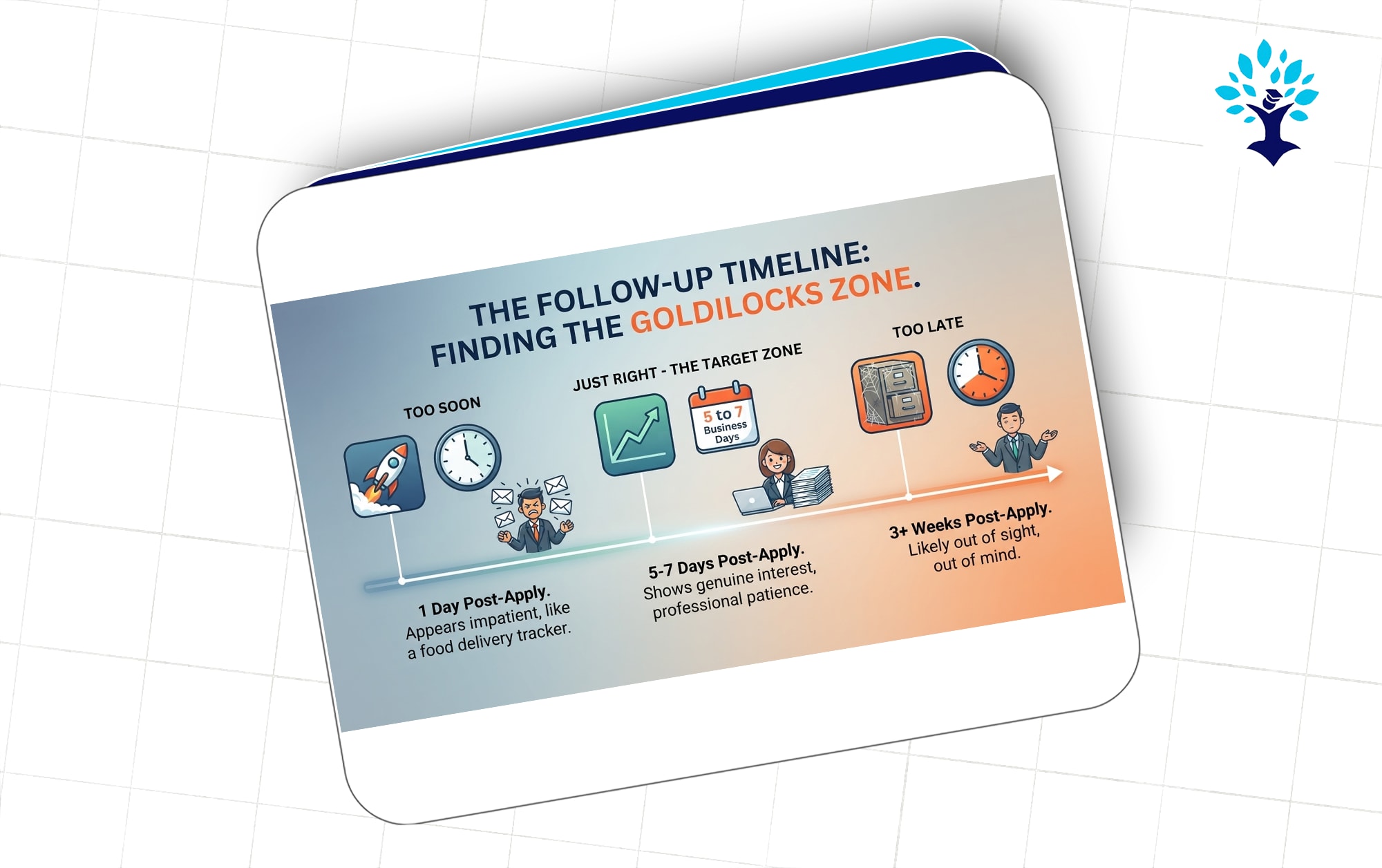
I'd say the two most common mistakes here are opposite ends of the same problem. One candidate emails the very next morning, treating the recruiter like a food delivery tracker. Another waits three weeks and assumes the recruiter still remembers exactly who they are out of the three hundred people who applied.
A reasonable middle ground looks something like this — five to seven business days for most corporate roles before your first check-in, unless the posting already gave you a specific timeline to work off. If there was an application deadline mentioned, wait until a few days after that passes rather than jumping in while resumes are still being collected. Fast-moving hiring — retail, BPO, seasonal work — tends to move on its own faster clock, so two or three days is usually enough there. And if you've already had some direct contact, like a referral or a recruiter who reached out to you first, you can nudge things along in three or four days without it feeling rushed.
The point of waiting isn't politeness for its own sake. It's about timing your message for when the recruiter's actually sitting down and going through that stack of applications, not the moment they're getting buried under a new one.
Pick the channel that fits, not the easiest one
Email is still your safest bet for most corporate jobs, mainly because it gives the recruiter room to reply when they actually have time, instead of putting them on the spot. If you have an actual contact email — from the posting, the company site, or LinkedIn — use it, and don't waste the subject line. Something like "Following Up — Marketing Executive Application, Priya Sharma" tells the recruiter exactly what they're opening before they've even clicked, which matters when their inbox looks like a battlefield.
LinkedIn is a decent backup when there's no direct email to work with, particularly for reaching whoever actually posted the job. Just don't send a bare connection request with zero context — reference the specific role, keep it short, and let it stand on its own.
Calling is where I'd tell you to be careful. Unless the job listing explicitly said "feel free to call" or you already know someone at the company, an unexpected phone call can land as more intrusive than an email ever would, even with the best intentions behind it.
What to actually write
Here's the part that trips people up the most — they either write too little to matter or too much to get read. A follow-up that reads like a second cover letter usually gets skimmed and skipped, because recruiters just don't have the bandwidth for it.
Keep it to four or five lines. Name the exact role and the date you applied so there's zero guessing involved. Say, in one honest sentence, why you're still interested — not a copy-pasted line you'd send to any company on earth. If something's changed since you applied, a new certification, a wrapped-up project, mention it here; it's a legitimate reason to be back in their inbox. Then close with something low-pressure, asking if there's any update on the timeline, and leave the door open for anything else they might need from you.
One thing I'd actively cut out: the apology. "Sorry to bother you," "I know you're busy" — recruiters read those lines fifty times a week, and they add nothing except length. Confidence reads better than humility here, every single time.
And know when to actually let it go
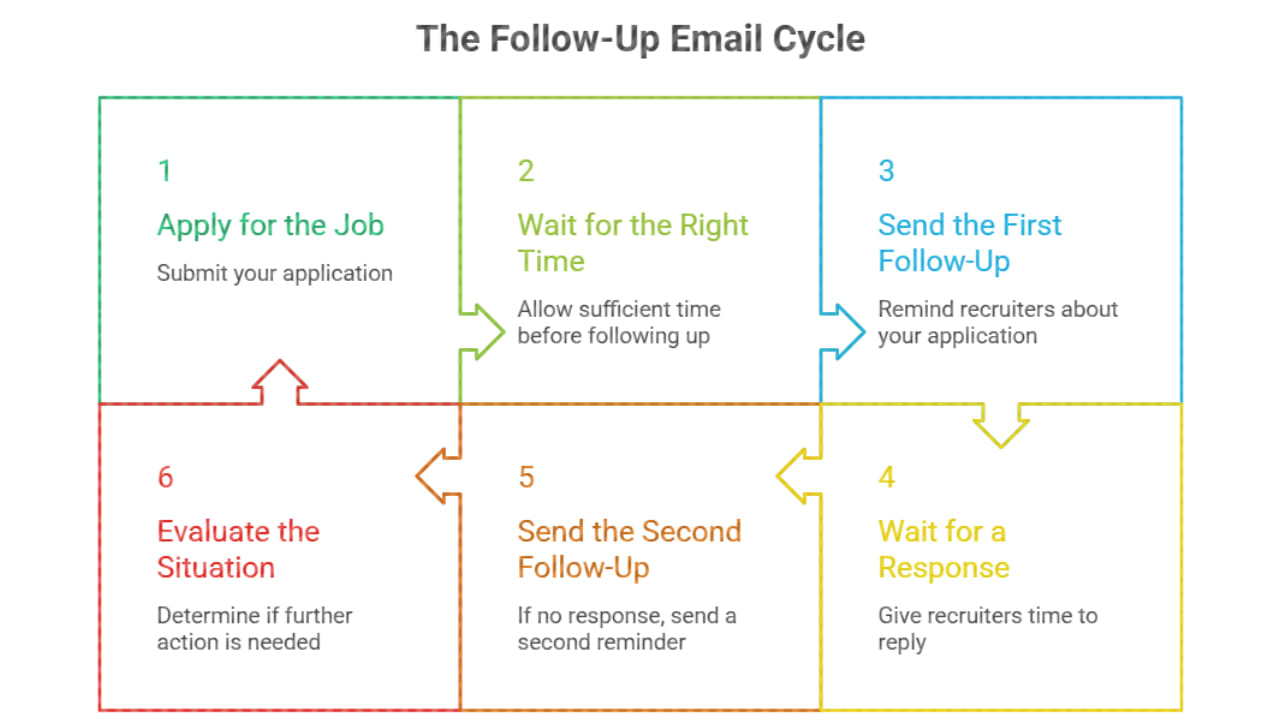
This is the part barely anyone brings up. One follow-up is completely normal. A second one, a week or two after the first with still no word back, is fine too. A third one is where it starts working against you instead of for you.
If you've followed up twice over two or three weeks and heard nothing, that's your answer, even if it's an unsatisfying one. Move your energy toward the next application instead of a fourth email. And whatever you do, don't hit a recruiter across email, LinkedIn, and a phone call all in the same day — that's not persistence, that's pressure, and it reads that way immediately.
About the silence itself
Sometimes a follow-up gets you a rejection instead of a callback, and weirdly, that's still a win, because at least it closes the loop instead of leaving you refreshing your inbox for a month. Other times, you'll hear nothing at all, even after doing everything right, and that's frustrating, but it's rarely personal. Roles get filled internally more often than people realize. Budgets shift mid-search. Sometimes the posting had five hundred applicants, and you never stood a real chance of hearing back, regardless of what you wrote. Delayed responses and longer hiring timelines have become increasingly common as recruitment processes continue to evolve. Understanding how the job search has quietly changed can help you set realistic expectations and adapt your job search strategy for today's hiring market.
Final thought
Following up well isn't about being persistent for the sake of it. It's about staying visible without turning into the candidate everyone in the office starts avoiding. Get the timing right, keep the message short, and know exactly when to stop. Do that across every application you send, and you'll start noticing something recruiters rarely say out loud — the ones who follow up thoughtfully are usually the ones who get the call back.