You Don't Need a Btech to Earn Well: High-Paying Careers for Non-Engineers in India
Published on August 13, 2026
Blogs

High-Paying Careers for Non-Engineers in India
The results season does something strange to families. The moment marks come out, half the neighborhood starts asking the same question — "engineering ya phir?" — like there's no third option worth mentioning. If you're not technical and you've sat through that conversation feeling a bit stuck, here's something worth hearing: the "phir" has gotten a lot bigger and a lot more profitable than most people give it credit for. Sales, marketing, design, HR, finance — these aren't backup plans anymore. Companies are paying serious money for people in these fields, sometimes more than what a mid-level developer takes home, and nobody's writing enough about it. So let's fix that.
What Changed in the Last Few Years
A product can be built beautifully and still flop if nobody hears about it, buys it, or bothers coming back after the first use. Somewhere along the way, companies figured this out properly, and marketing, sales, and design stopped being "support" and became the reason revenue actually shows up. A good salesperson closing enterprise deals can out-earn a backend developer two levels senior. A designer who understands why users drop off in the third screen of an app can single-handedly decide whether that app survives its first year.
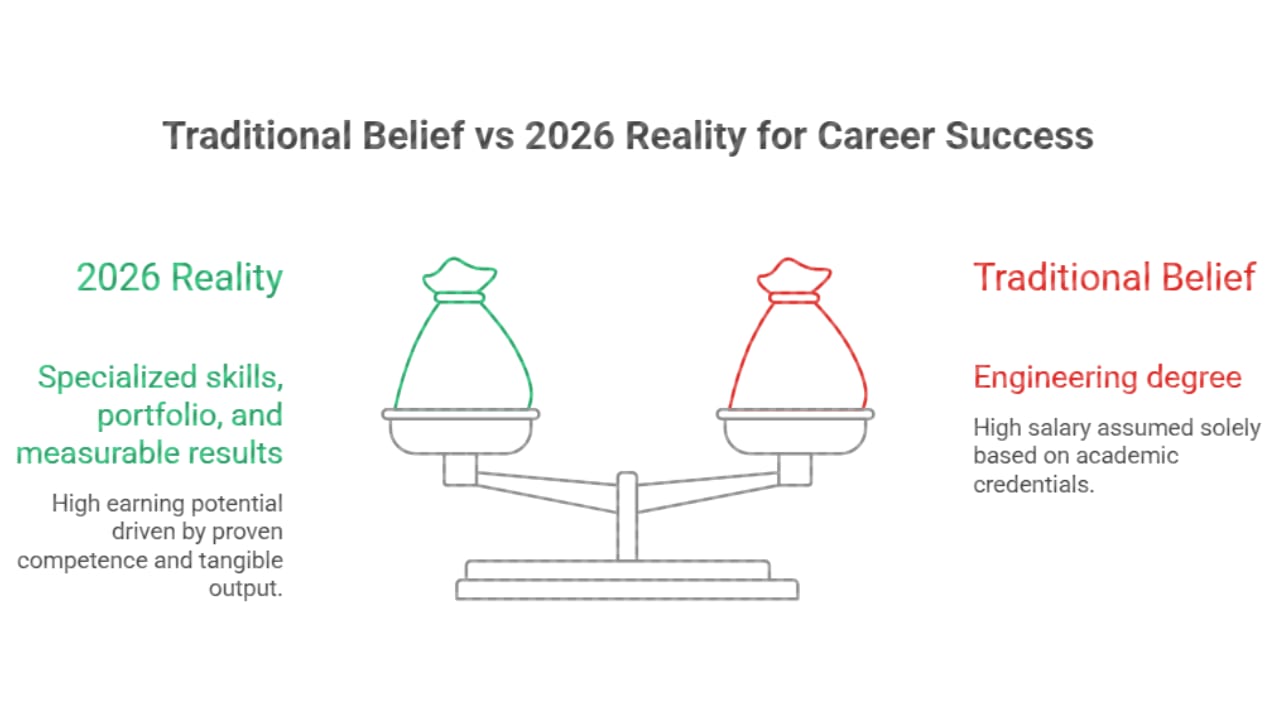
There's a catch, though, and it's worth being upfront about it. "I'm good with people" doesn't cut it anymore in an interview room. What gets you hired — and paid well — is proof. A marketer who can point to a real conversion number. An HR person who's actually run a hiring pipeline start to finish. A content writer who's grown something from zero readers to an actual audience. Vague soft skills went out of fashion around the same time everyone started asking for portfolios instead of just resumes. Here's where that shift has landed the money.
Digital Marketing Manager
Nearly every business has some kind of online presence now, and someone has to run the ad campaigns, plan the content calendar, and defend the spend when leadership asks "why did we spend two lakhs on Instagram this month?" That someone gets paid well for carrying that pressure.
Entry-level pay usually sits around ₹4–7 LPA, climbing to ₹12–22 LPA once you've got three to six years in and can show real campaign numbers. What actually gets you shortlisted isn't a certificate alone — it's a Google Ads or Meta Ads certification paired with a couple of real campaigns you've run yourself, even something as small as marketing a college fest, plus the ability to read an analytics dashboard without someone walking you through it line by line.
Sales and Business Development
Sales gets treated like the fallback option by a lot of students chasing more "respectable" titles, and honestly, that's a mistake. It's one of the only fields where your income genuinely has no ceiling once you're good — enterprise sales in SaaS, insurance, and fintech routinely outpays technical roles at the same experience level.
Entry-level: ₹4–8 LPA fixed, usually with incentives stacked on top
3–6 years in: ₹15–30 LPA including variable pay, sometimes more for top performers
This field doesn't ask for a specific degree. It asks whether you can hold a conversation with confidence, take rejection without letting it wreck your week, and actually enjoy the process of convincing someone. Personality moves the needle here more than anything printed on a resume.
UX/UI Designer
Not technical in the coding sense, but don't mistake that for "easy money." Companies pay design talent well because a confusing app quietly loses users every single day it stays broken, and most leadership teams have finally started noticing that bleed.
Fresh graduates typically start around ₹5–9 LPA, moving up to ₹15–28 LPA with three to six years of solid work behind them. Figma fluency is table stakes at this point. What separates candidates who get callbacks is a portfolio with two or three real case studies — pick an app you use daily, redesign a broken part of it, and document why you made each decision — combined with an actual understanding of how users behave rather than just how a screen looks.
HR Business Partner or Talent Acquisition Specialist
Getting a hire wrong is expensive, and companies have started paying accordingly for people who can build hiring pipelines properly, negotiate offers without losing good candidates, and keep employees from quietly walking out the door six months later.
Entry-level: ₹4–7 LPA
3–6 years in: ₹14–24 LPA
What stands out on a resume here isn't a generic "people person" line — it's an internship with actual recruitment exposure, familiarity with an ATS tool, and the ability to talk numbers around retention and time-to-hire instead of soft, unmeasurable claims.
Content Strategist or SEO Content Manager
Every brand fighting for attention online needs someone who understands what people are actually searching for, and more importantly, how to write content that ranks and converts rather than content that just reads nicely in a Google Doc.
Entry-level pay hovers around ₹4–7 LPA, and with three to six years of experience and a track record of published, ranking work, that climbs to ₹12–20 LPA. Strong SEO fundamentals matter here, but so does a portfolio with visible results — traffic numbers, ranking screenshots, anything that proves the writing did something beyond existing.
Financial Analyst or Investment Banking Analyst
Commerce graduates tend to underrate how far finance can take them, mostly because the path isn't as loudly marketed as tech careers are. Build the right technical-adjacent skills early — Excel modeling, valuation, financial reporting — and the payoff shows up fast.
Entry-level: ₹5–9 LPA
3–6 years in: ₹18–35 LPA
CFA Level 1 and a genuinely strong grip on Excel and PowerPoint for client-facing decks matter more here than most people expect walking in.
Operations Manager
Nobody writes glamorous LinkedIn posts about operations, but companies quietly pay very well for people who can keep a complicated business running without daily fires breaking out behind the scenes.
Entry-level roles pay ₹4–8 LPA, rising to ₹14–25 LPA with three to six years of experience. Recruiters here look for comfort with process documentation, vendor management experience, and — this one matters more than people think — a track record of actually fixing broken workflows instead of just pointing them out in a meeting and moving on.
How Non-Engineers Actually Get These Jobs
Knowing the roles exist is the easy part. Here's what tends to separate people who land offers from the ones stuck getting ghosted after the first round:
Finish one certification properly instead of starting five and abandoning them halfway — a completed Google Ads or HR analytics course carries more weight in an interview than a stack of half-done enrollments
Build a portfolio before you have a job, since most of these fields let you create real work independently — run a small ad campaign for a friend's shop, redesign an app that annoys you, publish writing wherever you can
Reach out to people already doing the job you want, and ask something specific rather than a vague "any tips for getting into marketing?" message that's easy to ignore And once you get that interview, make sure you're ready for the interview questions nobody prepares for.
Consider a startup early on even if the pay looks a touch lower on paper, because the ownership and measurable results you'll pick up there build a resume faster than a slower-moving large company ever will
Track your own numbers from the very first internship, because "I handled social media" says almost nothing in an interview compared to "I grew engagement by 40 percent over three months"
Final Thought
The old idea that only engineers get to earn well hasn't held up for a while now, and 2026's hiring numbers make that pretty hard to argue with. Sales, marketing, design, HR, and finance are all paying real money to people who can prove results, not just people who hold a particular degree. If you're not technical and you've been comparing yourself to the engineering crowd next door, stop. Go build a portfolio in whatever pulls you in, and let the proof of work do the talking — because that's what's actually getting people hired this year, not the branch printed on a certificate.